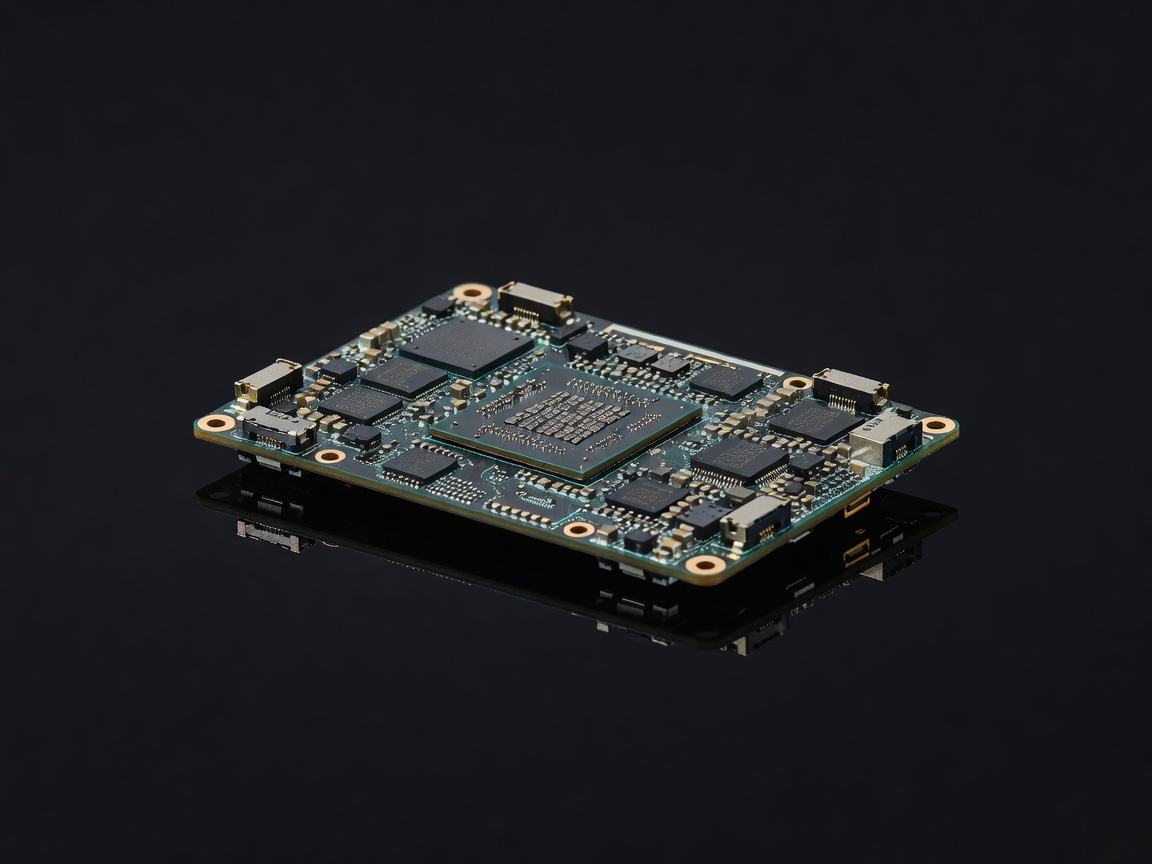
The Automotive Compute Paradigm Shift
Modern vehicles are undergoing an architectural evolution from distributed domain controllers to centralized zonal supercomputing. Leading this transition is NVIDIA's DRIVE platform, anchored by the Orin System-on-Chip (SoC) and the next-generation DRIVE Thor processor.
Technical Specifications Overview
- DRIVE Orin TOPS: 254 TOPS (INT8) per chip
- DRIVE Thor Performance: Up to 2,000 TFLOPS (FP8)
- CPU Architecture: 12x Arm Cortex-A78AE high-throughput cores
- Functional Safety: ISO 26262 ASIL-D Compliant
- Sensor Ingestion: Up to 16 High-Resolution Camera Streams, 8 Radars, 4 LiDAR units
Deep Learning Transformer Execution
With the rise of Vision Transformers (ViTs) replacing traditional convolutional networks, automotive AI hardware requires massive tensor performance with dynamic memory allocation. NVIDIA DRIVE Thor introduces FP8 precision, enabling automotive software teams to execute large multimodal vision-language models directly on vehicle hardware.
This allow automated vehicles to interpret complex road scenes, interpret hand gestures from traffic wardens, and predict erratic pedestrian pathways with ultra-low latency.
Official Platform Link: Visit NVIDIA DRIVE Official Site